


HOW IT ALL BEGAN
Meet Captain Dave Greenberger


The North Pacific ocean is one of the strongest natural elements on planet earth.To witness the power of the high seas is an experience only a few individuals will ever know.
Dave Greenberger grew up in the Pacific Northwest and as a small child his playground was on the decks of fishing boats tied at the local marina near his home in Tacoma.
Dave began fishing at the age of eleven and by the time he was twenty two, he owned his 48′ wooden fishing vessel ‘Jeanette’, and was making a living on the fishing grounds in the waters of the North Pacific.

The Jeanette was built as a ‘salmon packer’ transporting mass loads of salmon down from Alaska to Seattle for distribution. Her vast belly allowed for extreme buoyancy and she could safely cruise through the worst of ocean conditions in her course.
Late spring is when the first runs of adolescent albacore tuna begin to cross the dateline and feed in the offshore waters of the Pacific. This is when Dave would sail Jeanette on a due west course with one goal, plug the boat with tuna. Day and night her engine roared loudly causing a constant dull vibration which became a comfort almost like music that represented her heart beat sustaining the journey ahead.


Today Dave has made his home in Tacoma, Washington where he oversees the canning operations and takes extreme pride in producing the finest canned seafood available today. Nearby the F/V Jeanette is harbored in the calm waters of Puget Sound and is honored for her 20 years of devotion.
Dave has retired her from fishing, and has refurbished every plank and nail. Her classic beauty represents years of devotion, tireless stamina and majestic strength…just like the tuna she once fished.
AND THE STORY CONTINUES...

ABOUT OUR FISH
-
Caught in America, canned in America
-
Hook and line caught in the Pacific Northwest and Alaska, canned in Washington state
-
Only BPA-Free cans used
-
Wild caught and safe from antibiotics, chemicals, and mercury
-
Dave’s salmon is caught in the waters of North Pacific Coast. It is hand-packed and cooked in its own natural juices.
-
Dave’s salmon is an excellent source of Niacin and a complete protein.
-
The natural oils in Salmon contain omega-3 fatty acids which are beneficial in reducing cholesterol leading to a reduced risk of heart disease.
-
Dave’s albacore tuna is premium quality, unbleached albacore fillets. The albacore is hook and line caught offshore by local fisherman in the waters of the North Pacific.
-
The albacore are hand filleted, hand-packed, and cooked in their own natural juices to offer the very best in flavor, texture, and quality.
WILD SALMON vs. FARMED
Taste the Difference! There’s a reason why wild tastes better than farmed. Wild Salmon have a better life-style and consequently have a better taste than the farmed version.
What’s life-style got to do with it? Plenty. Compared to a farm fish living in a controlled environment, raised on pellets and antibiotics, the wild Salmon quite simply lives a great life. Dave’s Salmon are line caught in the ocean, when they are feeding on those tasty crustaceans ensuring a deep, rich Salmon flavor. That’s why you will go “wild” with Salmon!
And, that’s why you’ll always get the best from Dave's Gourmet Seafood! As for farmed fish escaping to the wild, their chances of survival are very slim. Being raised all their lives in a controlled environment and hand fed, they never develop survival skills such as pursuing prey and locating their spawning grounds.

What is “farmed” salmon?
Farmed salmon is the practice of industrial, mass production of salmon. Farmed salmon are raised in net cages – penned directly in the ocean.
Why is farmed salmon considered dangerous?
Farmed salmon are corralled into tightly controlled environments — allowing for disease and parasites to multiply and spread quickly. Antibiotics are added to feed pellets to help farmed salmon fight disease outbreaks. These antibiotics can be passed through the salmon to the consumer,
causing the reduced effectiveness of certain antibiotics for curing human illness. The waste of farm fish is not treated and directly released into
the ocean, smothering marine life and passing contaminants into the ocean.
Preliminary findings suggest that farmed salmon contain higher levels of PCB’s and dioxins than wild salmon. These chemicals can cause cancer, high blood pressure, strokes, immune-system problems and reproductive disorders. PCB’s can also affect normal development in children.

How does the nutrition differ?
Farmed salmon does not offer the same health benefits as wild salmon. Farmed salmon contain a higher fat content than wild salmon without any of the added health benefits of the Omega-3 oils.
Why does your albacore look different? This question is one that comes up often. Our albacore appears and tastes much different than the “corporate tuna” on today’s market. Each fish is processed by hand and canned in its own juices — nothing is added and therefore the taste is not compromised.
Other brands of tuna have been processed multiple times, baked and then bleached to acquire the “white” coloring you see. Once that is complete, these “tuna” are filled with preservatives and additives.
Due to the freshness and premium quality of Dave’s Gourmet Seafood it has a life of approximately 10 years with proper storage!
Proper storage means keeping product in a dry, cool place and making certain that the vacuum seal is intact (no dents!) and there is no visible bulging in the can itself.
Some say our canned fish actually gets better with time…to be honest, we agree with them!
Hook and line caught wild salmon and albacore
-
Naturally high in protein, low in fat
-
No oil, water, or salt is added
-
Packed in their own natural omega - 3 rich juices beneficial in reducing the risk of heart disease
-
Tastes like fresh salmon or albacore, but cooked for you and ready to eat, right from the can!

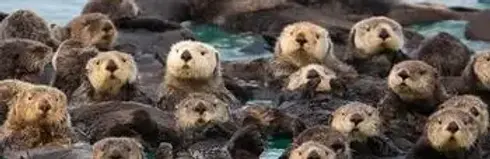
PROTECT OUR OCEANS
Our country is blessed with sandy beaches, rocky coves, towering sea cliffs, and an astonishing variety of ocean wildlife along our shores. Yet, our oceans are suffering due to human actions. This vast, mysterious wilderness drives the processes that make our planet capable of supporting life, while providing a home to nearly 200,000 known species—and potentially hundreds of thousands more yet to be discovered.
People are drawn to the ocean's beauty and vitality. These are the waters where dolphins and seals surf the waves, sea turtles patrol the reefs, and the great whales migrate along our coasts. These are the beaches where families and friends gather to enjoy sun-filled days. However, our love for the oceans must be matched with actions to protect them.
Human activities are putting marine life and their habitats at risk. Offshore drilling, climate change, plastic pollution, and over-fishing have already caused extensive damage to our coastal waters. It's clear that we need to take more decisive action to preserve ocean life.
The greatest threats to our oceans are global warming and ocean acidification, both driven by the massive amounts of CO2 released into the atmosphere. To combat this, we must drastically reduce these emissions by transitioning to clean energy sources as soon as possible.
Another critical issue is the overwhelming accumulation of plastic in our oceans. We can help save our oceans by significantly reducing single-use plastics, such as shopping bags, straws, disposable cups, and plates. By making these small yet impactful changes in our daily lives, we can work towards a healthier future for our oceans and the diverse life they sustain.